Concrete Slab & Foundation Work
Build a rock-solid foundation that supports your structure for decades with proper engineering and expert installation.
Why Your Foundation Is the Most Important Part of Any Building
Everything starts with the foundation. It literally holds up your entire structure, whether that is a home, garage, shed, or commercial building. A strong, properly built foundation keeps your building level, prevents cracks in walls and floors, and protects against settling and movement. If the foundation is not done right, you will deal with problems for as long as the building stands. That is why choosing experienced contractors who understand soil conditions, drainage, and engineering principles is so important. We build foundations in Monroe, GA that are designed to last and support whatever you put on them.
Foundation work is not something you can cut corners on. It requires careful planning, proper site preparation, quality materials, and skilled execution. We start every foundation project by assessing the soil, understanding the load requirements, and planning for drainage. Then we follow engineering specifications and building codes to ensure structural integrity. Whether you need a slab foundation for a new home, a shed foundation, or a foundation for an addition, we do it right. You get peace of mind knowing your structure is built on a solid base that will not let you down.
Key Elements of a Quality Foundation
- •Soil preparation: We assess soil type and stability, remove unsuitable material, and compact the ground properly before pouring.
- •Proper drainage: Water management is critical. We grade the site and install drainage systems to keep water away from the foundation.
- •Reinforcement: We use rebar, wire mesh, or fiber reinforcement based on engineering requirements to add strength and prevent cracking.
- •Correct thickness: Foundation slabs must be thick enough to support the intended load. We follow specifications for residential, commercial, and industrial applications.
- •Quality concrete mix: We use the right concrete mix for your project, taking into account climate, curing conditions, and structural requirements.
Types of Foundation Work We Do
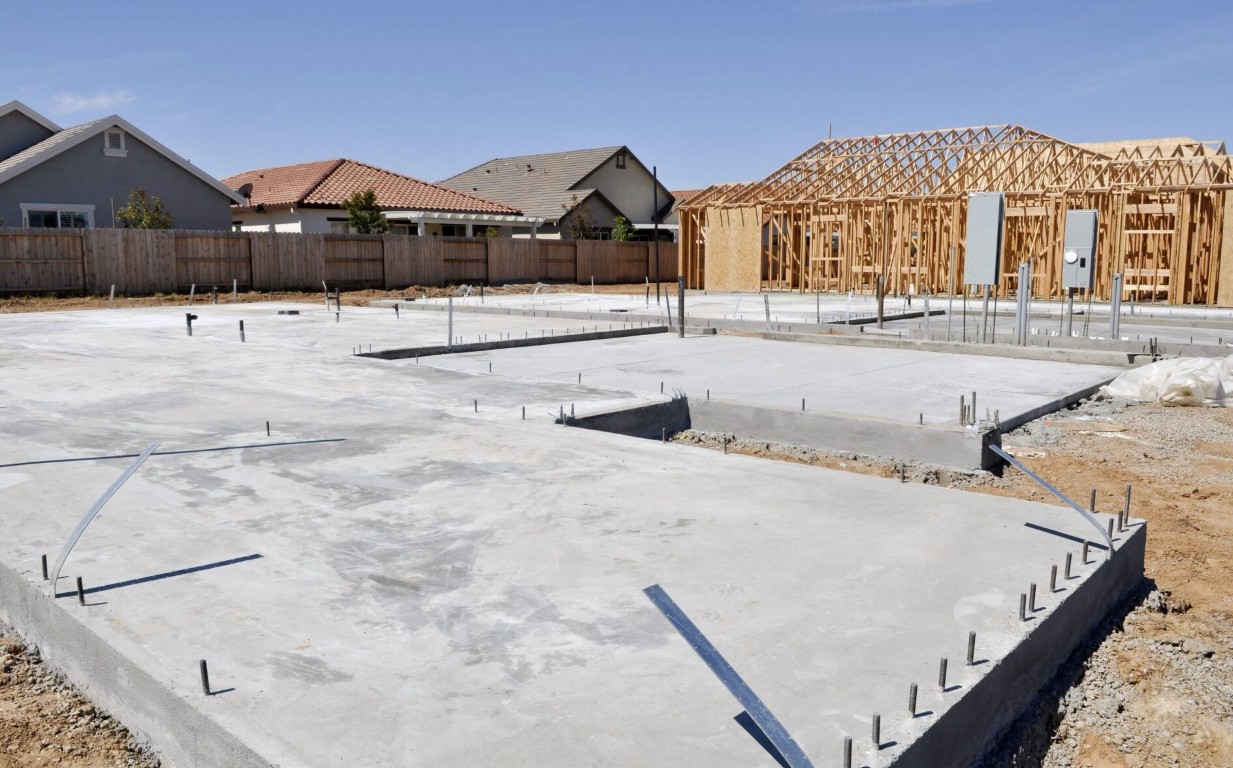
There are different types of concrete foundations depending on the building type, soil conditions, and intended use. Slab-on-grade foundations are common for residential homes, garages, and sheds. They consist of a single layer of concrete poured directly on the ground with reinforcement and a vapor barrier. This type of foundation is cost-effective, durable, and works well in many situations. We also build thickened-edge slabs, monolithic slabs, and post-tension slabs for specific applications. Each type has its advantages, and we help you choose the right one for your project.
For commercial and industrial projects, we handle larger slabs that support heavy equipment, storage, and high traffic loads. These require deeper footings, heavier reinforcement, and careful engineering. We work with structural engineers and follow detailed plans to ensure every spec is met. Whether you need a simple shed foundation or a complex commercial slab, we have the experience and equipment to deliver. We also do foundation repairs and replacements when existing foundations have failed or deteriorated beyond repair.
Residential vs. Commercial Foundations
Residential foundations are typically designed for standard home loads, including walls, roofs, furniture, and occupants. They follow local building codes and engineering standards for residential construction. Commercial foundations must support much heavier loads, including machinery, inventory, vehicles, and more. They often require thicker slabs, deeper footings, and more reinforcement. We have experience with both types and understand the different requirements. No matter the size or complexity of your project, we make sure your foundation is built to the right standards for its intended use.
What Happens During Foundation Installation
The foundation installation process involves multiple steps, each critical to the final result. First, we clear and excavate the site to the required depth. We remove topsoil and any unstable material, then compact the subgrade to create a firm base. Next, we bring in gravel or crushed stone and compact it in layers. This base layer provides stability and drainage. For slab foundations, we install a vapor barrier to prevent moisture from rising through the concrete. Then we set up forms to define the shape and edges of the slab.
Reinforcement comes next. We place rebar or wire mesh according to the engineering plans, ensuring it is properly positioned and secured. If the project requires plumbing or electrical rough-ins, those go in before the pour. Once everything is in place, we pour the concrete and begin finishing. For foundations, the finish is typically smooth and level since it will be covered by flooring or other materials. After pouring, we protect the concrete during curing and monitor it to ensure proper strength development. The result is a solid, level foundation ready to support your building for decades.
Working with Building Codes and Inspections
All foundation work must meet local building codes and pass inspections. We handle the permit process and coordinate with inspectors to ensure everything is done correctly. Building codes exist to protect you and ensure structural safety. We stay current with code requirements and follow them on every project. If your project requires engineering plans or soil testing, we work with qualified professionals to get the job done right. You can trust that your foundation will meet or exceed all applicable standards and regulations.
Common Questions About Concrete Foundations
Foundation work is complex, and we understand you may have questions. Here are answers to some of the most common concerns homeowners and builders have about concrete slab installation and foundation construction.
Need a Foundation You Can Count On?
We build residential and commercial foundations throughout Monroe, GA and surrounding areas. Contact us for a consultation and estimate.