Concrete Leveling
Raise sunken concrete back to the proper level quickly and affordably without tearing it out.
Why Concrete Sinks and How Leveling Fixes It
Sunken concrete is more than just an eyesore. It creates trip hazards, causes water to pool in the wrong places, and makes your property look neglected. Concrete sinks when the soil beneath it settles, washes away, or compacts unevenly. This happens for various reasons including poor compaction during installation, soil erosion, water intrusion, or natural settling over time. Instead of tearing out and replacing the entire slab, concrete leveling lets you raise the sunken sections back to their original height. The process is fast, affordable, and far less disruptive than replacement. Homeowners in Monroe, GA are choosing concrete leveling to fix problem slabs and eliminate safety hazards.
Leveling works on driveways, sidewalks, patios, garage floors, and more. If you have concrete that has dropped below where it should be, leveling can likely fix it. The process involves drilling small holes in the sunken slab and pumping material underneath to lift it. Once the concrete is back at the proper height, we fill the holes and you are good to go. In most cases, you can use the surface within hours instead of waiting weeks for new concrete to cure. And because we are not replacing the concrete, the cost is typically half or less of full replacement.
Common Causes of Sunken Concrete
- •Soil erosion: Water washing away soil from beneath the slab leaves voids that cause settling.
- •Poor compaction: If the base was not properly compacted during installation, it settles over time under the weight of the concrete.
- •Tree roots: Growing roots can lift or shift soil, causing concrete to settle unevenly.
- •Drainage problems: Water collecting under or near concrete can wash away soil and create settling.
- •Soil composition changes: Some soils expand and contract with moisture changes, leading to uneven support.
Mudjacking vs. Polyurethane Foam Leveling
There are two main methods for leveling concrete: mudjacking and polyurethane foam injection. Mudjacking, also called slabjacking, involves pumping a slurry mixture of water, soil, sand, and cement under the slab. The mixture fills voids and lifts the concrete as it is pumped in. Mudjacking has been around for decades and works well for many applications. It is typically the more affordable option and uses readily available materials. However, it requires larger injection holes and adds significant weight to the soil beneath the slab.
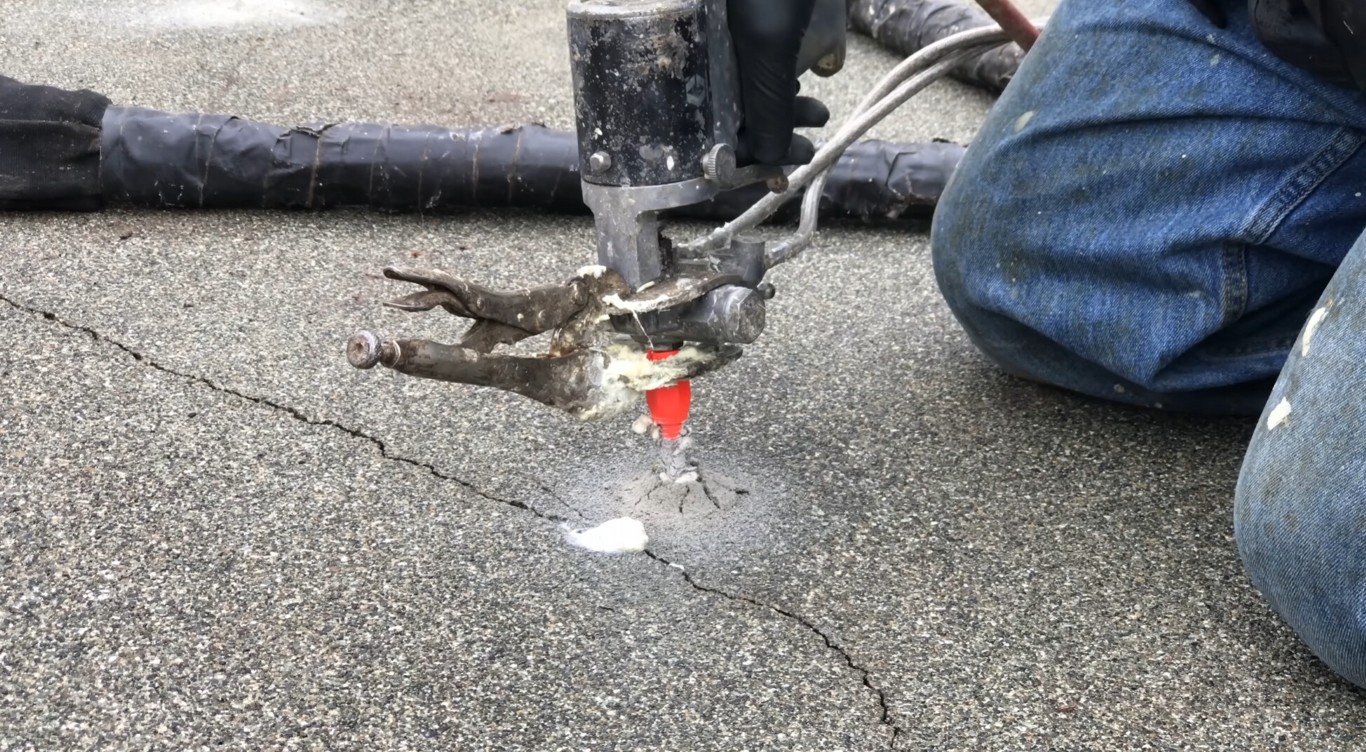
Polyurethane foam leveling is a newer technology that uses expanding foam to lift concrete. We drill small holes, inject the foam, and it expands to fill voids and raise the slab. The foam is lightweight, cures quickly, and will not wash away like soil-based slurries. It works well in situations where added weight is a concern or when precision is important. The holes are smaller and less noticeable after filling. However, foam leveling typically costs more than mudjacking. We assess your situation and recommend the best method based on the type of slab, extent of settling, and your budget. Both methods work when applied correctly.
Benefits of Leveling Over Replacement
Leveling costs significantly less than replacing concrete. You avoid the expense of demolition, disposal, new materials, and labor. The process is much faster, often completed in a few hours instead of days or weeks. There is less disruption to your property and daily routine. You keep your existing concrete, which might have decorative finishes or match adjacent sections. And because leveling addresses the void beneath the slab, it provides a stable base that can last as long as the concrete itself. If your concrete is structurally sound but just uneven, leveling is almost always the smarter choice.
The Concrete Leveling Process
The leveling process starts with an assessment. We identify which sections need to be raised and by how much. Then we drill strategically placed holes in the sunken slab. For mudjacking, these holes are typically 1 to 2 inches in diameter. For foam injection, they are smaller, around 5/8 inch. Next, we insert the injection equipment and begin pumping material under the slab. We monitor the lift carefully to ensure the concrete rises evenly and reaches the target height. This requires skill and experience to avoid over-lifting or creating new problems.
Once the slab is level, we remove the equipment and fill the injection holes with concrete patch material. We match the color and finish as closely as possible so the repairs blend in. In most cases, the filled holes are barely noticeable, especially on textured or weathered surfaces. After the patch material sets, your concrete is ready to use. The entire process typically takes a few hours, and you can walk or drive on it the same day or next day depending on the method and conditions. It is a quick, effective solution that solves the problem without major disruption.
Addressing Underlying Issues
Leveling fixes the immediate problem, but we also look at why the concrete settled in the first place. If poor drainage caused erosion, we recommend solutions to redirect water. If tree roots are the culprit, we discuss options for managing them. Addressing these underlying issues helps prevent future settling and ensures your leveling lasts. We provide honest assessments and practical advice so you understand what caused the problem and how to prevent it from happening again. Our goal is not just to lift your concrete, but to give you a long-term solution.
Common Questions About Concrete Leveling
Here are answers to questions homeowners often ask about concrete leveling and slab repair.
Fix Your Sunken Concrete Today
We provide professional concrete leveling services throughout Monroe, GA. Contact us for a free assessment and estimate.